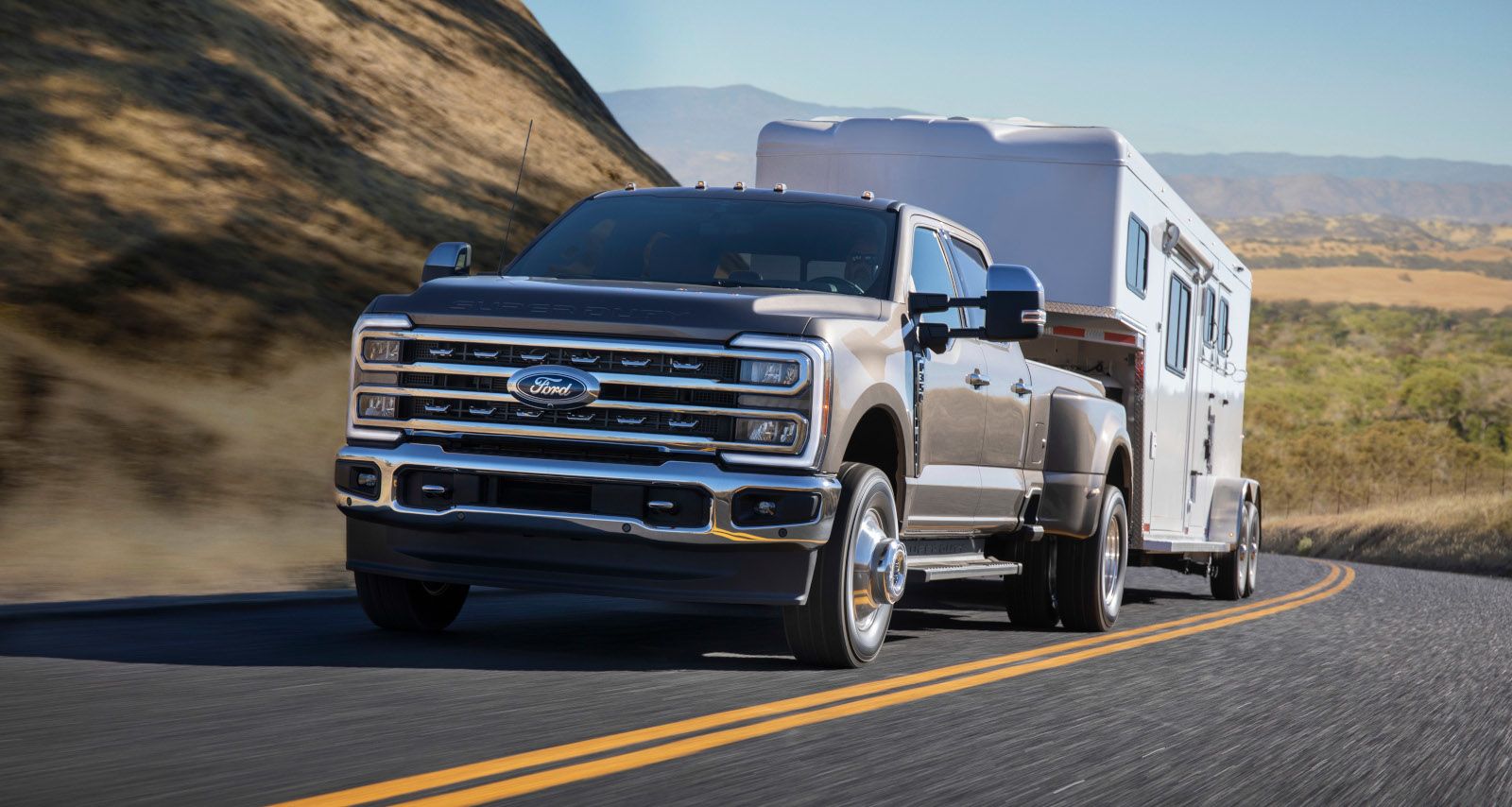
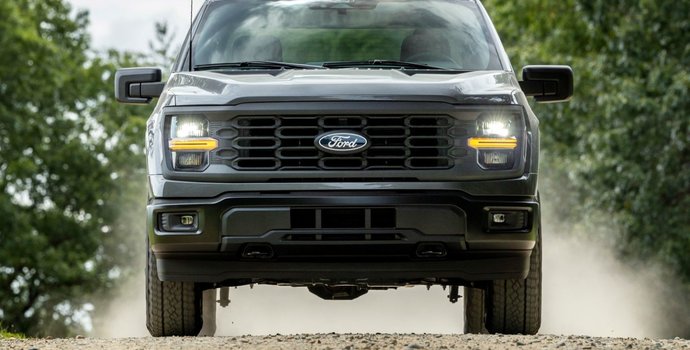
If you're towing heavy equipment to job sites across Simcoe County or hauling commercial loads through Ontario's varied terrain, the 2026 Ford Super Duty lineup delivers the capability you demand. From the F-250's versatile power to the F-450's maximum-duty performance, Super Duty trucks are engineered for professionals who can't compromise on towing capacity or payload strength.
At Bayfield Ford in Barrie, we understand that choosing the right Super Duty configuration means matching precise specifications to your exact workload. This guide breaks down the engine options, towing thresholds, and capability differences across the F-250, F-350, and F-450 models to help you identify which Super Duty fits your operation.
Explore Ford Lineup
Step into the future with our versatile and powerful SUVs at Bayfield Ford, where cutting-edge technology and luxury come together for an exceptional driving experience.
Shop Now
Super Duty Capability Overview: What Sets These Trucks Apart
Ford's Super Duty lineup occupies a distinct tier above the F-150, designed specifically for heavy towing and commercial applications. While the F-150 maxes out at 13,500 lbs of conventional towing capacity, Super Duty pickups push well beyond that threshold with properly equipped configurations.
The Super Duty family includes three core pickup models—F-250, F-350, and F-450—each offering progressively higher GVWR (Gross Vehicle Weight Rating) and towing capability. These trucks share core engineering but differ in suspension components, axle ratios, and chassis reinforcements that determine maximum load ratings.
Towing Capacity Across Super Duty Models
|
Configuration Type
|
F-250/F-350 Max Towing
|
F-450 Max Towing
|
|
Conventional Hitch
|
Up to 30,000 lbs
|
Up to 30,000 lbs
|
|
Fifth-Wheel
|
Up to 35,000 lbs
|
Up to 35,000 lbs
|
|
Gooseneck
|
Up to 40,000 lbs
|
Up to 40,000 lbs
|
These figures represent maximum ratings with high-capacity diesel engines and appropriate towing packages. Actual capacity varies by cab configuration, bed length, axle ratio, and drivetrain selection. Gooseneck configurations deliver the highest ratings due to load placement directly over the rear axle, improving weight distribution and stability.
Engine Options: Power for Every Workload
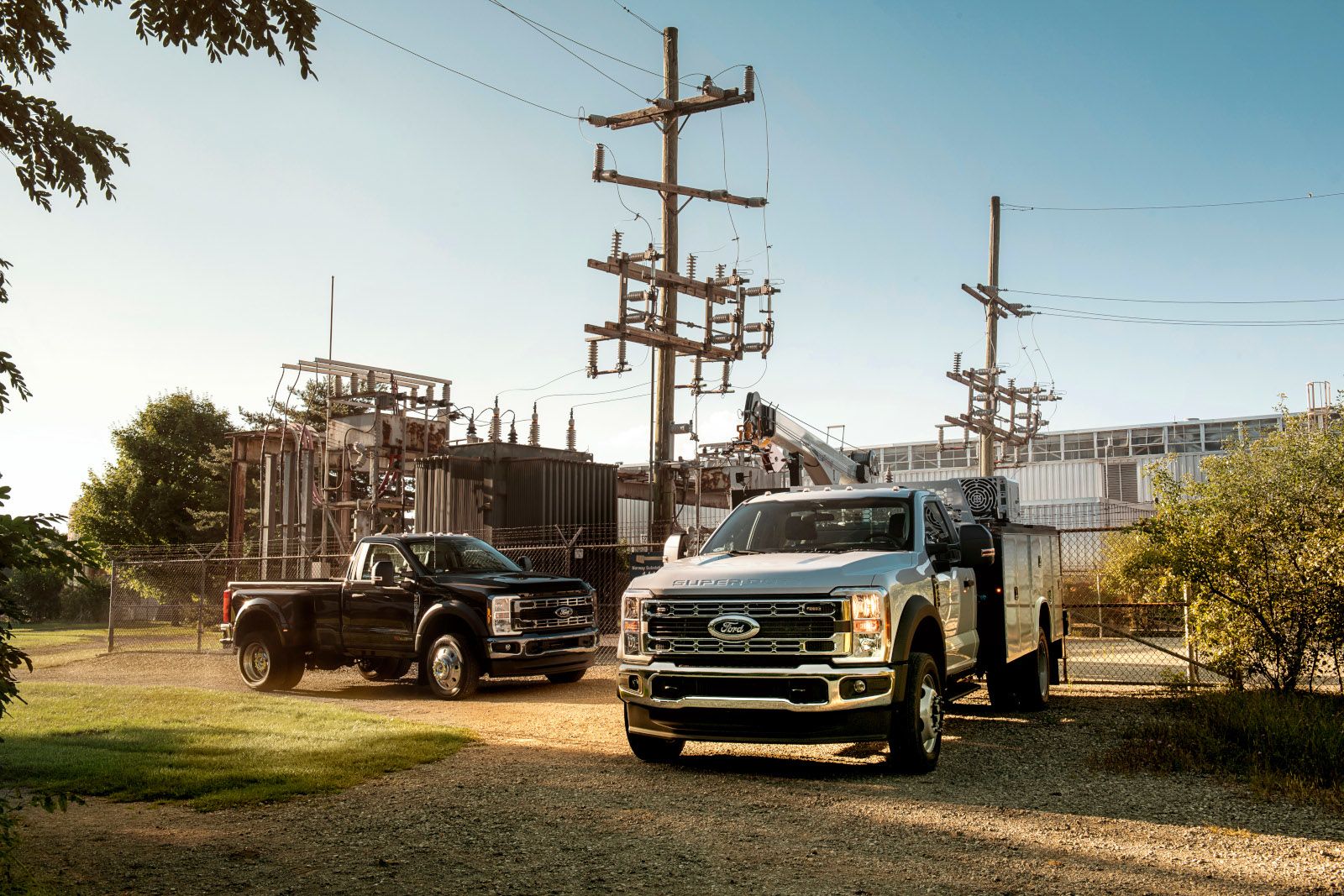
Super Duty trucks offer multiple engine choices to match different performance priorities and operating costs. Each engine pairs with Ford's TorqShift heavy-duty automatic transmission, engineered for sustained high-load operation.
Gasoline Engine
The standard gasoline V8 provides strong baseline performance for operators who prioritize lower upfront costs and simpler maintenance schedules. This engine delivers robust low-end torque suitable for moderate towing and payload work, with fuel availability advantages in remote work sites.
Diesel Engine Options
Ford's Power Stroke diesel engines represent the core of Super Duty capability, offering exceptional torque output and fuel efficiency under load. Diesel configurations achieve the highest towing ratings across all three models and provide superior performance when operating at or near GVWR for extended periods.
High-output diesel variants add increased horsepower and torque for operators managing maximum-capacity loads regularly. These engines include enhanced cooling systems and reinforced internal components designed for sustained heavy-duty operation.
F-250: Versatile Heavy-Duty Foundation
The F-250 serves as the entry point to Super Duty capability, offering substantial towing and payload increases over the F-150 while maintaining better manoeuvrability than larger models. This truck suits contractors, agricultural operators, and recreational towers who need serious capability without the bulk of a one-ton chassis.
Key F-250 Advantages:
- Lower operating costs compared to F-350/F-450
- Easier parking and manoeuvring in urban job sites
- Strong towing capacity for most fifth-wheel trailers
- Available in Regular Cab, SuperCab, and Crew Cab configurations
The F-250 handles heavy equipment trailers, large livestock trailers, and substantial fifth-wheel RVs with confidence. Its suspension tuning balances load-carrying capability with reasonable unladen ride quality, making it practical for daily driving between job sites.
F-350: Maximum Single-Rear-Wheel Capability
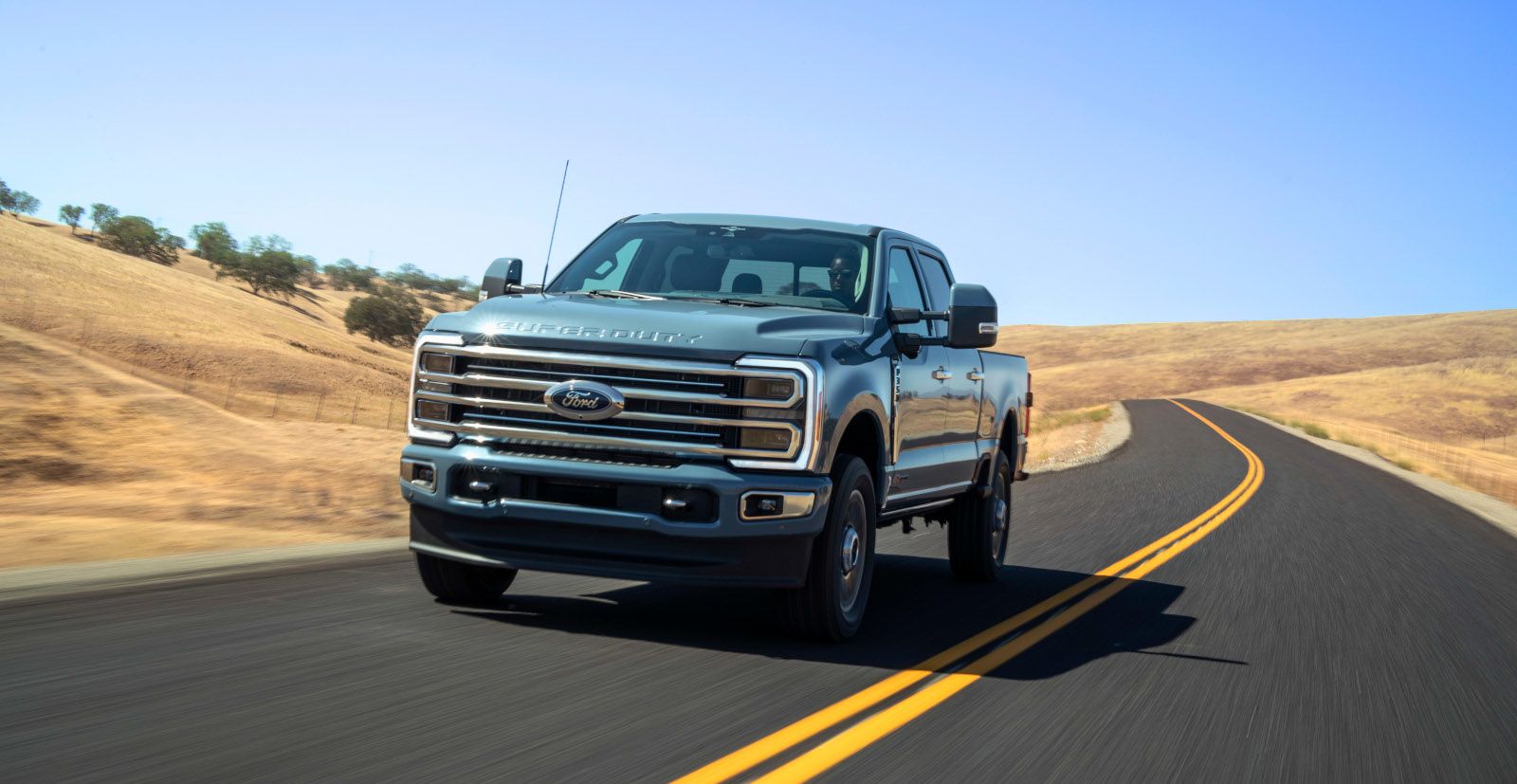
The F-350 builds on the F-250 platform with increased GVWR and available dual-rear-wheel (DRW) configurations. Single-rear-wheel F-350 models offer similar dimensions to the F-250 but with higher payload ratings, while DRW variants provide the ultimate stability for heavy fifth-wheel and gooseneck loads.
When to Choose F-350:
- Regular operation near maximum towing capacity
- Large fifth-wheel trailers requiring enhanced stability
- Commercial applications demanding higher payload ratings
- Preference for DRW configuration for improved load distribution
The F-350 DRW configuration significantly improves stability when towing at or near maximum capacity. The wider rear track and additional tire contact patch reduce trailer sway and enhance braking performance with heavy loads. This makes the F-350 DRW the preferred choice for professional operators managing large equipment trailers or heavy commercial loads daily.
F-450: Commercial-Grade Maximum Duty
The F-450 represents the top of the Super Duty pickup range, offering the highest GVWR and payload capacity in a pickup configuration. This truck targets commercial operators, fleet managers, and professionals who regularly operate at the absolute limits of pickup truck capability.
F-450 Distinguishing Features:
- Highest GVWR in Super Duty pickup lineup
- Enhanced chassis components for extreme-duty service
- Standard dual-rear-wheel configuration
- Available with specialized commercial upfits
The F-450 excels in applications like heavy equipment transport, large-scale landscaping operations, and commercial towing services. Its reinforced frame and upgraded suspension components handle sustained high-load operation that would exceed the duty cycle of lighter models.
Comparing Super Duty to Competitor Heavy-Duty Trucks
When evaluating heavy-duty trucks, Super Duty models compete directly with Ram 2500/3500 and Chevrolet/GMC HD series. Each manufacturer approaches capability differently, but Ford's Super Duty lineup offers distinct advantages for Ontario operators.
Super Duty vs Ram HD
Ram's heavy-duty lineup uses the 6.4L HEMI V8 gasoline engine (405 hp, 429 lb-ft) or available 6.7L Cummins diesel. The Ram 2500 achieves up to 14,929 lbs conventional towing with the diesel, while the 3500 offers higher GVWR ratings.
Ford's Super Duty diesel engines deliver competitive torque output with the advantage of integrated Ford technology systems. Super Duty trucks also offer more granular model differentiation across the F-250/F-350/F-450 range, allowing closer matching to specific workload requirements.
Super Duty vs Chevrolet/GMC HD
Chevrolet Silverado and GMC Sierra HD models offer the 6.6L gasoline V8 (401 hp, 464 lb-ft) or 6.6L Duramax diesel (470 hp, 975 lb-ft). The Silverado 2500 HD achieves 20,000 lbs conventional towing with diesel and NHT package, while fifth-wheel capacity reaches 22,500 lbs.
Ford's Super Duty lineup matches or exceeds these figures with properly equipped diesel configurations, while offering the unique F-450 model for applications requiring maximum pickup-based capability. Super Duty trucks also integrate Ford's Pro Trailer suite of towing technologies, including Pro Trailer Backup Assist and Pro Trailer Hitch Assist for simplified manoeuvring.
Towing Technology and Safety Features
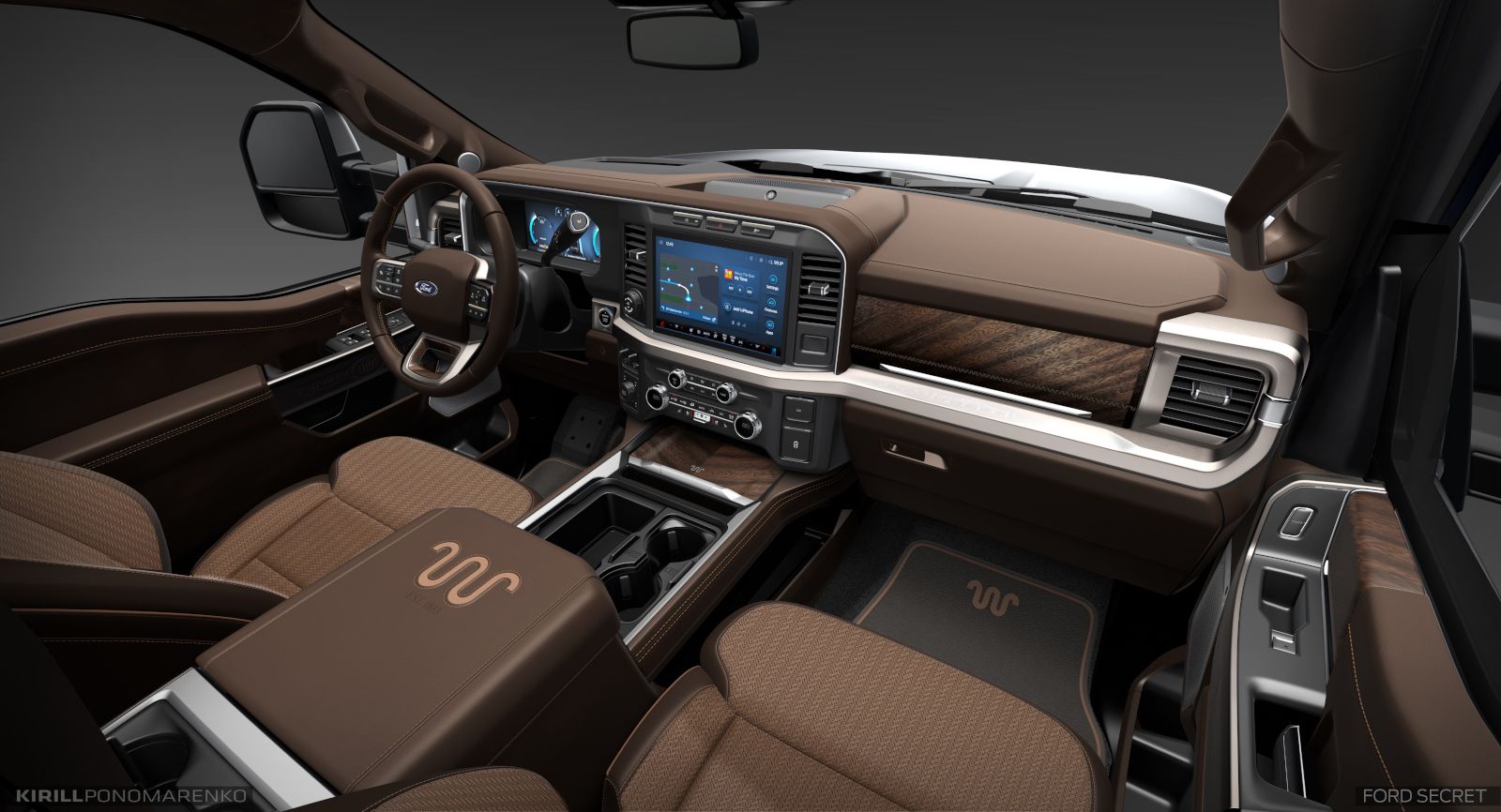
Beyond raw capacity numbers, effective towing requires integrated technology that enhances control and confidence. Ford equips Super Duty trucks with advanced systems designed specifically for heavy-load operation.
Pro Trailer Backup Assist simplifies reversing with trailers by using a rotary knob to control trailer direction. The system automatically steers the truck while the driver controls speed, eliminating the reverse-direction steering inputs required for manual backing.
Pro Trailer Hitch Assist uses rear cameras and sensors to guide alignment between the truck's hitch and trailer coupler. Visual and audible cues help position the truck precisely, reducing the frustration of solo hookups.
Onboard Scales provide real-time payload monitoring through sensors integrated into the suspension system. This allows operators to verify they're within legal weight limits before departing, preventing overload violations and unsafe operating conditions.
Choosing Your Super Duty Configuration
Selecting the right Super Duty model requires honest assessment of your actual towing and payload requirements. Consider these factors:
Typical Load Weight: Match your regular operating loads to model capacity, leaving appropriate safety margin. If you frequently tow near 25,000 lbs, the F-350 DRW provides better stability than an F-250 at maximum capacity.
Trailer Type: Fifth-wheel and gooseneck applications benefit from higher-GVWR models due to tongue weight considerations. Conventional towing allows more flexibility across the lineup.
Daily Driving: If the truck serves dual duty as a daily driver, consider DRW width and F-450 dimensions fit your parking and manoeuvring requirements.
Operating Environment: Commercial operators managing sustained high-load duty cycles benefit from the F-450's enhanced durability, while occasional heavy towers may find the F-250 or F-350 SRW more practical.
Experience Super Duty Capability at Bayfield Ford
The 2026 Ford Super Duty lineup delivers the heavy-duty performance that Barrie's commercial operators and serious towers demand. From the F-250's versatile capability to the F-350's maximum single-rear-wheel performance to the F-450's commercial-grade durability, each model offers distinct advantages for specific applications.
At Bayfield Ford in Barrie, our commercial vehicle specialists understand the precise capability requirements of Ontario operators. We'll help you configure the right Super Duty model with the engine, axle ratio, and towing package that matches your exact workload. Visit our dealership to discuss your towing needs and explore the full Super Duty lineup.
You might also be interested in these blogs: